What if we've been looking from the wrong place?
We spend much of our lives looking outward.
At the world, its problems, its possibilities, the things we want to change and the things we hope to create.
Yet how often do we consider the one doing the looking?
The self through which we experience everything.
For me, this question sits at the heart of how we understand ourselves, our relationships, our societies and our place within the living world.
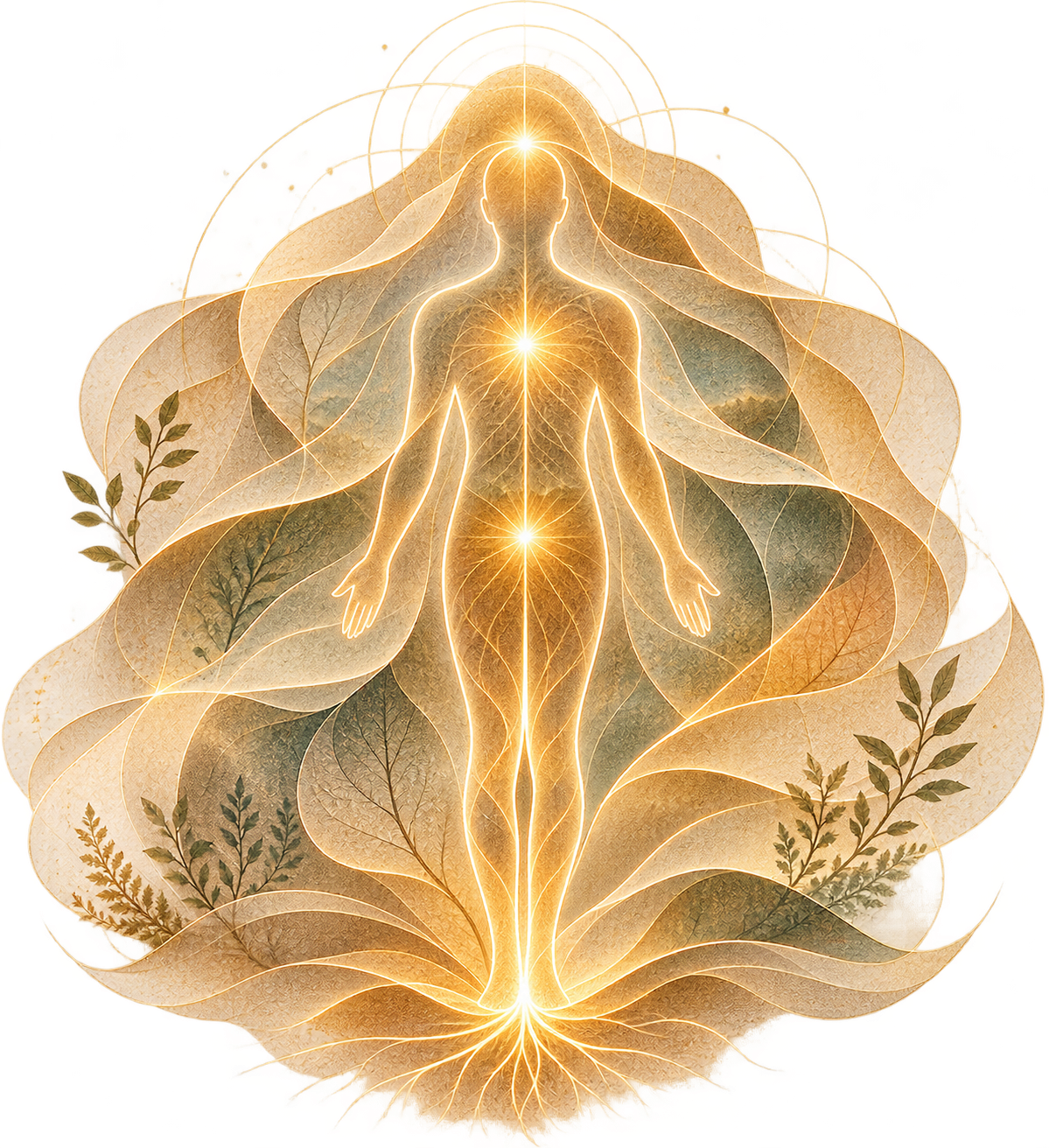
The self we've come to know.
From the moment we're born, we begin absorbing the world around us.
Language, culture, beliefs, expectations, experiences. We learn who we are, where we belong, what matters, what is possible and what isn't.
Gradually, these become the identity we recognise as ourselves.
The character.
And while that character helps us navigate everyday life, we can become so identified with it that we rarely question whether it represents the whole of who we are.
We think, choose, react, build and create from within its familiar boundaries.
And collectively, we build a world from those same ways of being.
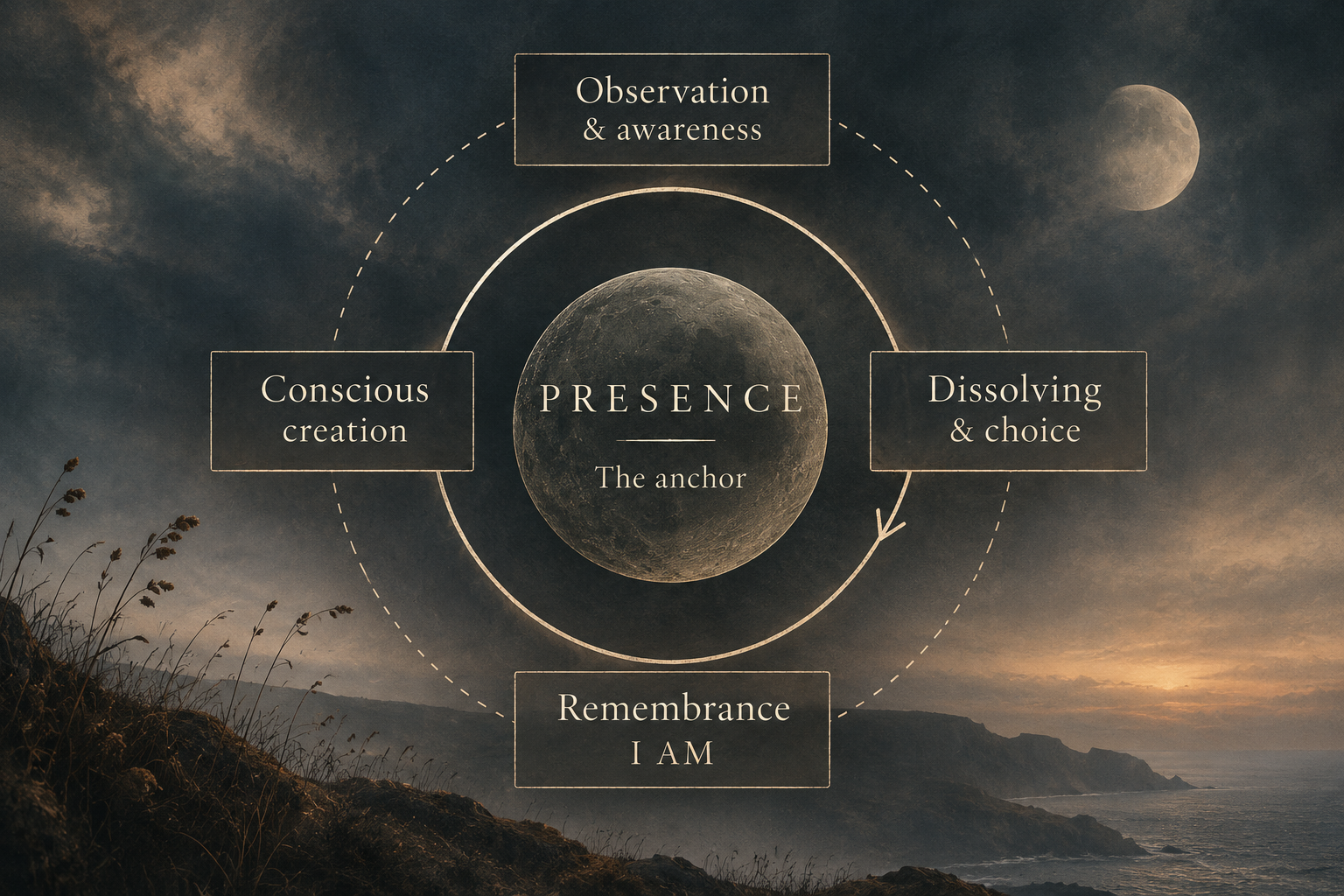
Awareness and presence.
But there is another possibility.
What if we are not simply the thoughts we think, the experiences we've accumulated or the identities we've constructed?
What if there is an awareness beneath them?
Something capable of observing the thinking mind without being entirely defined by it.
This is where presence becomes important to me.
Not as another achievement or an improved state of being, but as a way of experiencing life without automatically becoming entangled in every thought, belief or reaction.
A space in which we can begin to recognise what we've mistaken for ourselves.
Presence as the anchor.
Awareness allows us to observe. Presence gives us the space to choose.
To recognise the patterns we've inherited, loosen our identification with them, and remember something of ourselves beyond the identities we've constructed.
From there, we can begin to create consciously, rather than simply repeating what we've always known.
These aren't separate destinations, but interconnected aspects of an ongoing exploration.
Remembrance rather than becoming.
So much of modern life is organised around becoming.
Becoming more successful, more confident, more productive, more accomplished. Even becoming more spiritual.
But what if the deeper exploration isn't about adding something?
What if it's about recognising what was already there, before the layers accumulated?
In metaphysical traditions, this is sometimes expressed through the idea of the true Self, the higher Self, or simply I AM.
For me, remembrance describes this more closely than growth.
Not creating another identity to aspire towards, but loosening our identification with the one we've constructed.
Conscious creation.
This distinction matters because we are continually creating.
Not only through art, music or the things we make, but through our choices, relationships, organisations, institutions and the ways we participate in society.
When we're operating entirely from conditioned identity, we may recreate the very patterns we're trying to change.
Fear can produce more fear. Separation can produce more separation. Systems built around domination can continue reproducing domination, even when their language changes.
But awareness introduces the possibility of choice.
Of recognising a pattern without automatically continuing it.
Of allowing intuition, compassion, imagination and a deeper sense of connection to inform what we bring into being.
This is what conscious creation means to me.
Not simply imagining a different outcome, but examining the consciousness from which we're creating.
Beyond the individual.
None of this ends with the individual.
We are participants in an extraordinary living world, interconnected with other people, other species and the environments that sustain us.
Yet many of the systems we've created depend upon separation. Human from nature. Mind from body. One life valued above another.
My perspective is deeply influenced by animism, by the understanding of life as relational rather than something existing solely for human use.
It asks us to reconsider not only who we believe ourselves to be, but how we relate to everything around us.
What might our societies, organisations, economies and creative expressions become if we began from a different understanding of our place within life?
An ongoing exploration
I don't see these questions as a philosophy to be mastered or a destination to reach.
They are part of an ongoing exploration, something to observe, question and experience in ordinary life.
In the way we speak to one another.
In how we lead, teach, create, consume, care and make decisions.
In what we choose not to continue.
And in what we might create instead.
Perhaps changing the world doesn't begin with another system, another ideology or another version of who we think we should become.
Perhaps it begins with recognising who is doing the creating.
And discovering what becomes possible from there.